5 min read
Why vaccines matter
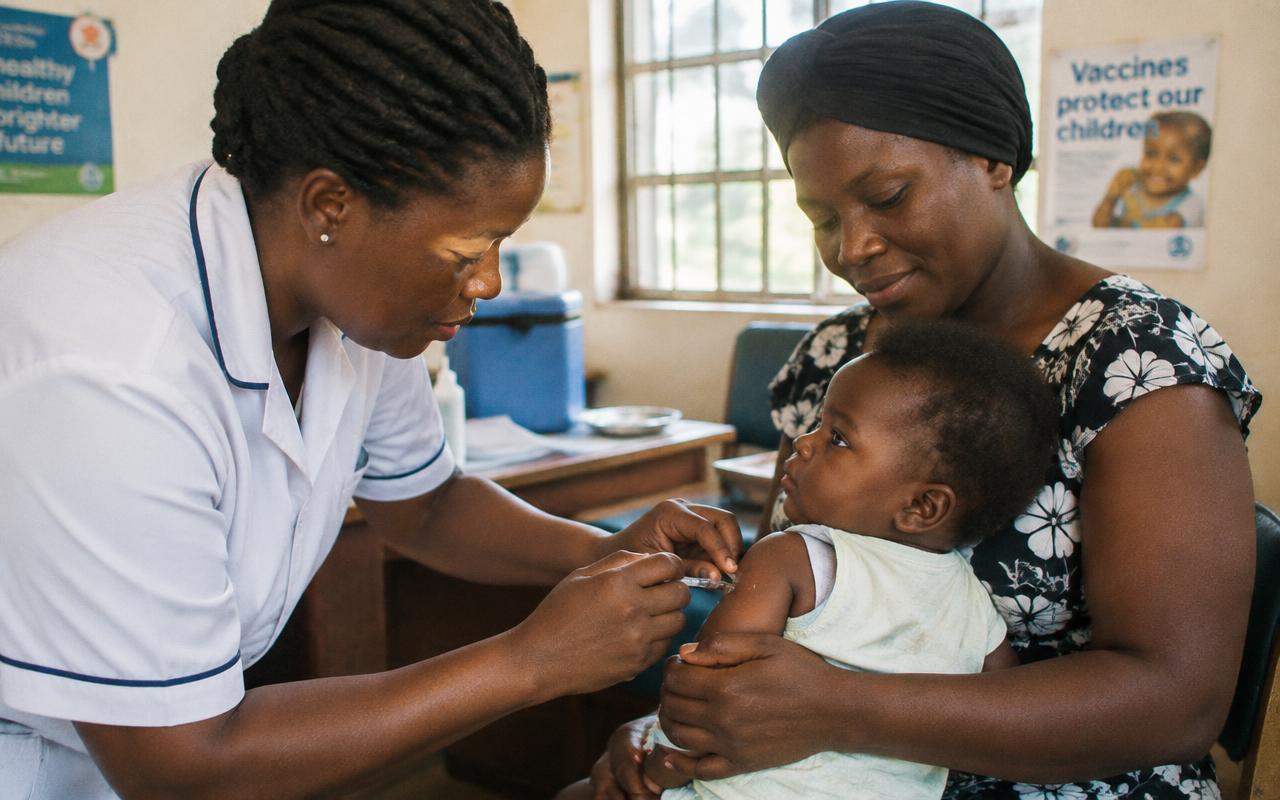
Vaccines teach the body to fight serious diseases such as measles, polio, whooping cough, pneumonia and diarrhoea caused by rotavirus. They are among the safest and most effective ways to protect children.
Keep to the schedule
Kenya's routine schedule starts at birth and continues through early childhood. Key visits are at birth, 6, 10 and 14 weeks, 6 months, 9 months and 18 months. Bring your child's clinic booklet to every visit so the nurse can record each vaccine and the child's weight.
After a vaccine
Mild fever, fussiness or a sore spot for a day or two is normal and shows the body is building protection. Breastfeed often and keep the child comfortable. Ask the nurse which medicine is safe for fever.
Growing strong
Breastfeed only (no water or other food) for the first six months, then add soft, varied foods while continuing to breastfeed. Wash hands with soap after the toilet and before preparing food, and give vitamin A and deworming when offered.