6 min read
What is diabetes?
Diabetes means there is too much sugar (glucose) in the blood because the body does not make enough insulin or cannot use it well. Type 2 is the most common type in adults and is linked with weight, inactivity and family history. Many people in Kenya live with diabetes without knowing it.
Signs to look out for
Symptoms often develop slowly.
- Passing urine often, especially at night.
- Constant thirst and a dry mouth.
- Tiredness, blurred vision, or wounds that heal slowly.
- Tingling or numbness in the feet, or frequent infections.
Daily steps that make a difference
Good control greatly lowers the risk of damage to the eyes, kidneys, nerves and heart.
- Take medicines or insulin exactly as prescribed, even when you feel well.
- Keep starch portions moderate and spread through the day; choose whole grains and beans.
- Stay active — even a 15-minute walk after meals lowers blood sugar.
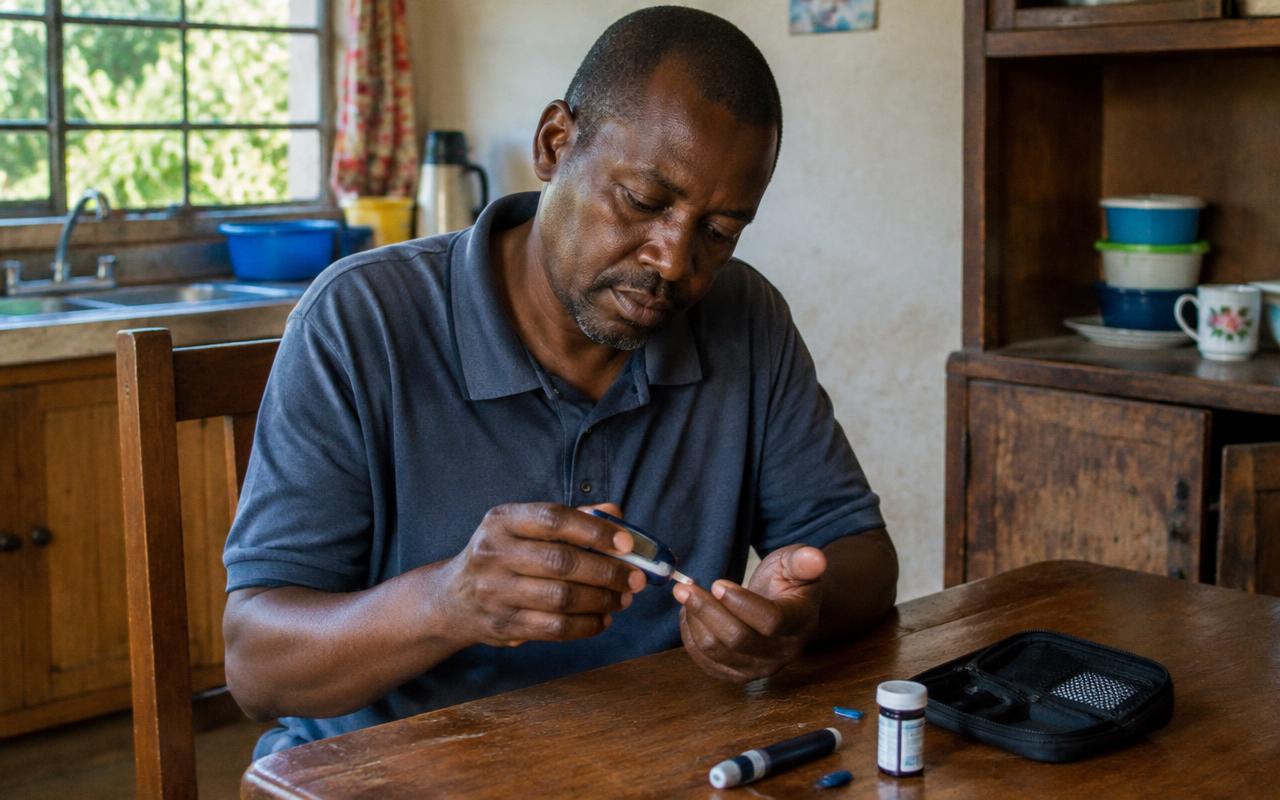
- Check your blood sugar as advised and write the results down to bring to clinic.
Look after your feet
Diabetes can reduce feeling in the feet, so small cuts may go unnoticed and become infected. Check your feet every day, keep them clean and dry, wear well-fitting shoes, and never walk barefoot.
Know the warning signs of low sugar
Shaking, sweating, confusion or a fast heartbeat can mean low blood sugar. Take something sweet right away — such as half a glass of juice or three teaspoons of sugar in water — then eat a snack, and tell your clinician if it happens often.